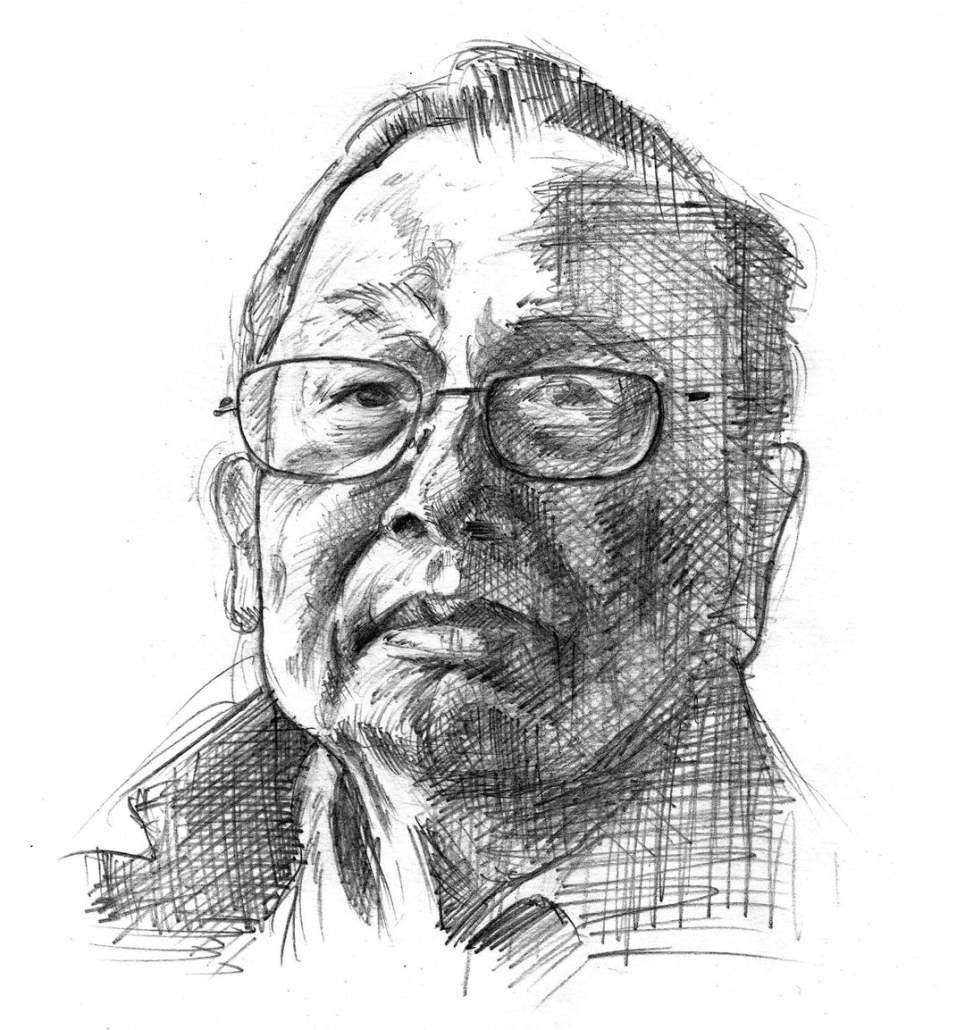
Joma, proletarian-socialist revolutionary
This is PRISM’s tribute to Jose Maria Sison and a review of his writings on socialism, delivered by Pio Verzola Jr. as a speech at the “Ka Joma Lives!” celebration of Joma Sison’s 85th birth anniversary on 8 February 2024, in Utrecht, The Netherlands. We are hereby republishing it with minor edits.
JOMA, PROLETARIAN-SOCIALIST REVOLUTIONARY
Talk at the “Ka Joma Lives!” celebration of Joma Sison’s 85th birth anniversary
8 February 2024, in Utrecht, The Netherlands
By Pio Verzola Jr.
Good afternoon here, and good morning, good evening to our many other online participants in other timezones of the world.
I’m honored to speak today and meet all of you once more, including K. Julie, K. Louie, and K. Coni. We are here, gathered as comrades and colleagues, friends and family, to mark the 85th birthday of our dear and esteemed comrade Jose Ma. Sison, and just as importantly, to celebrate his life, review his legacy, and in my case, to conduct a modest 20-minute revisit of one of his works that is as relevant today as it was in 1992, more than 30 years ago.

Joma Sison and SSAMR, 1992
As founding chairman of the CPP, Joma had of course already been “standing for socialism against modern revisionism” since 1968 and even earlier. His grasp of proletarian revolution, Marxism-Leninism, and Maoism in particular, became distinct while still at UP Diliman, later as founding chairman of Kabataang Makabayan, with deep involvement in the workers’ movement. This was honed further by his exposure to China’s Great Proletarian Cultural Revolution in the mid- to late 1960s.
Again, in 1992, Joma was at the forefront of the Second Rectification Movement, which also rejected the opportunist lines that flirted with revisionism and wrought much damage to the revolution. It was in that year that the CPP’s leading organs issued the rectification documents that electrified and revitalized the revolutionary movement in the Philippines.
“Stand for Socialism Against Modern Revisionism”, which is the topic of my talk, and which I will refer to from here on as SSAMR, is one of those main rectification documents.
Global context and core content of SSAMR
Joma wrote SSAMR under his nom-de-guerre Armando Liwanag, chairman of the CPP’s Central Committee. At 40 pages, it is a solidly packed and most comprehensive document. Its publication date was 15 January 1992—just three weeks after the Soviet Union formally dissolved itself.
From 1989 to 1991, the entire world was witness to the successive collapse of the Soviet Union and its allied states within the Warsaw Pact in Eastern Europe. These were supposedly socialist countries, but had long been ruled by corrupt and abusive revisionist cliques. They pretended to be Marxist-Leninist but in fact already functioned as new bourgeois ideologues and bureaucrats, who gradually replaced socialist institutions with bureaucrat-capitalist ones, or brazenly privatized capitalist firms. But the pretension was wearing too thin, so from 1989 to 1991, their revisionist regimes self-dissolved and were replaced by outright anti-communist and pro-capitalist or pro-Western ones.
The core content and structure of SSAMR starts with the restatement of the CPP’s Marxist-Leninist stand against modern revisionism, candidly stating its self-criticism and linking it to the ongoing rectification movement.
It then proceeds to revisit the legacy of Lenin and Stalin in the theory and practice of socialist revolution and construction. The third section of the paper traces the historical process of capitalist restoration. The last section, which comprises nearly half of the paper, discusses the most prominent lessons from the collapse of the said revisionist regimes in the Soviet Union and Eastern Europe.
More recent JMS writings on socialism and revisionism
Joma proudly owned authorship of the SSAMR, but obviously did not stop there in his critique of modern revisionism and in further advancing the theory and practice of proletarian-socialist revolution.
He wrote a lot more related to or as followup to SSAMR, and here I can only list down a select few from recent years. I invite everyone to read these, because they are so instructive of how Joma never tired of delving deeply into new phenomena, seeking truth from facts, updating his own immense database of knowledge, carefully weighing the various trends, and drawing new conclusions, even revising old ones to reflect unfolding practice.
- On the Future of Socialism (1992)
- On the Petty Bourgeoisie and the Future of Socialism (7 November 1992)
- Socialism and the New World Order (28 September 1994)
- The Fatal Course of Imperialism and Inevitability of Socialism (9 November 1998)
- Bankruptcy of Imperialist Globalization and Urgency of the Socialist Cause (November 1998)
- Tasks and Prospects of the Workers of the World amid the Global Financial and Economic Crisis (4 May 2009)
- Requisites for Building the Socialist Future (14 November 2014)
- Historic Significance, Global Impact and Continuing Validity of the Great October Socialist Revolution Led by Lenin (5 May 2017)
- Continuing Validity and Vitality of Marxism (5 May 2018)
- In Transition to the Resurgence of the World Proletarian Revolution (15 March 2020)
- Lenin at 150: Lenin Lives! (22 April 2020)
- On the World Situation (26 September 2022)
In his talks and writings, Joma encouraged revolutionaries to identify and analyze mistakes and shortcomings, draw lessons from experience, and always, not just to study theory but to apply theory to practice, to test the validity of theory in practice, to go back to the drawing board as needed. That, after all, is what rectification means.
And so in that spirit, proletarian socialists, all revolutionaries in fact, must likewise revisit the experience of the former socialist states and draw lessons from their victories as well as defeats.
Experience of the Soviet Union and China
SSAMR discusses at length the legacy of Lenin and Stalin in building socialism. It gave attention to exposing the false myths and addressing the issues being raised by the revisionist, Trotskyist, and reformist crowds. They wished to blame all the real and imagined defects of the Soviet era on its founding Bolshevik leaders but especially on Stalin—even those defects that emerged long after Lenin and Stalin were gone.
Next, the paper traced the historical process of capitalist restoration in the Soviet Union, starting with the Khrushchev regime, followed by the Brezhnev regime, all the way to the Gorbachov regime that presided over the Soviet Union’s final collapse.
Employing the tools of dialectics in analyzing Soviet history, Joma explains that we must account for both continuities and discontinuities. That means, not all aspects of Soviet life were good in the time of Lenin and Stalin (in fact they had to cope with immense challenges) It wasn’t that “everything turned sour” only after Khruschov launched his infamous coup in 1956.
Nevertheless, the paper consistently points to the sharp differences between the Lenin and Stalin periods (1917-1953), on one hand, and the post-Stalin regimes (1956-1991) on the other hand. It stressed that Stalin’s errors (of which there were a few huge ones) were still within the socialist framework, while those of the post-Stalin era were systematic revisionist lines that led to capitalist restoration.
We also note that the SSAMR already provides glimpses and insights on similar lessons drawn from the experience of China, which in 1976 had turned decisively revisionist and began its massive shift to the capitalist road. Even earlier, in some public interviews, in 1989 for example (after the social unrest and repression of massive protests in China culminated in the Tienanmen massacre), Joma already stated that China was revisionist-ruled and was fast turning capitalist.
Twenty years later, in a 2009 interview by a Canadian journalist, Joma was more definitive and explicit about China, when he said: “The world is becoming much tighter with more imperialist powers being added to the mix. There’s Russia. Russia went from social-imperialism in the second half of the twentieth century to regular imperialism by the 1990s. And the same goes for China, which is itself aiming to become a major imperialist power.” Still sometime later, Joma would more explicitly declare that indeed, China has become imperialist and involved in superpower tugs-of-war with its main rival, the US.
Although our time today is too limited, I would encourage everyone to also study the extensive writings of Joma and other proponents of Marxism-Leninism-Maoism on the Chinese experience—its long and complex socialist past (1949-1976), including the Great Debate leading to the Sino-Soviet split in the early 1960s, and the Great Proletarian Cultural Revolution (1966-76), and likewise, its rapid descent to revisionism and, shall we say, monopoly capitalism and imperialism “with Chinese characteristics” in the past 40-plus years.
Lessons in wielding proletarian state power
Revisionists and reformists alike—not to mention the brazenly anti-communist big bourgeoisie—shudder at the very mention of the dictatorship of the proletariat. The Soviet revisionists, in particular, had long shifted to the class-blind notion of “people’s state.”
But that is one huge lesson that the SSAMR focuses on: the class character of the socialist state must be proletarian, that is, direct rule by the modern working class. This includes the use of state power to prevent the restoration of bourgeois rule.
This mandate of the socialist state is not paranoid, because experience has proven that the overthrown exploitative classes find ways to sabotage socialism through external and internal means, and that class struggle continues in socialist society.
There are contradictions between class enemies, which must be resolved in favor of the working class and its allies. And there are also contradictions among the people, which must be resolved democratically and non-antagonistically within the framework of socialism.
The working class wields power, but unites the people (meaning, democratic classes) under its leadership. Thus, the socialist state must develop democratic processes and institutions on the widest possible scale, to ensure and encourage the exercise and enjoyment of democratic rights by the broad masses, individually and collectively.
And so, drawing lessons from the actual experience of socialist states, SSAMR reiterates the equally important role of state bodies, the ruling (communist or workers’) party, and mass organizations, in strengthening socialist democracy. The socialist state must provide solid constitutional and institutional guarantees, to ensure national, social, and individual freedoms.
Joma, both in SSAMR and in other articles he issued in the 1992-94 period, focused on bureaucratism and petty-bourgeoisification within the socialist state and ruling party as the biggest internal threats.
These trends are the social basis for opportunism, bureaucratic corruption and revisionism, which, if left unchecked, grows into a new bourgeoisie. This reemergent exploiter class will trigger acute class struggles, eventually overwhelm the proletarian character of the state and party, adopt repressive and abusive measures by state security forces, alienate the majority of the people, and trigger justified pushback by the proletarian cadres and the masses.
Once proletarian power is decisively overthrown (e.g. under Khrushchev in the Soviet Union, under Deng in China), this new bourgeoisie rapidly transforms itself into a bureaucrat big bourgeoisie. When it decides to privatize, on its own or in partnership with foreign imperialists, it becomes not just a big bourgeoisie as in old capitalism, but a monopoly big bourgeoisie that sooner or later self-actuates its imperialist drive.
But there are many valuable positive lessons on how to combat these dangers. Against bureaucratism, for example, the ruling party must develop criticism and self-criticism, aboveboard ideological struggle, supervision by the masses, and constant infusion of fresh blood especially those from the basic masses. In a strategic sense, these are all covered by Mao’s theory of combatting revisionism and continuing revolution, which we will touch on shortly.
Lessons in building the socialist economy
The SSAMR presented so many lessons in building the socialist economy, and obviously this presentation can cover only a few.
One is to start building socialism immediately once the tasks of the people’s democratic revolution are basically completed. Nationalization, or more specifically the transfer to public ownership of key industries, facilities, and resources, will give the people’s democratic state an excellent starting point—the commanding heights so to speak—for building socialism. At the same time, enough attention must be given to transitory measures, such as economic reforms of a bourgeois-democratic nature, to take care of the mess and many loose ends left over from the old reactionary regimes, and to meet the masses’ most urgent needs.
From thereon, definitely socialist relations of production must be instituted and further developed. These would include, for example, correct policies on wages, prices, workplace management, role of unions, expanded agricultural cooperatives all the way to people’s communes, which would be owned and operated collectively by the people in a more comprehensive way and on a much wider scope.
These would provide solid and sustainable benefits to the masses, especially the working class and the peasantry. But, perhaps even more importantly, when these policies are implemented in ways that steadily reduce inherent inequalities and enhance socialist equality, they also prevent the rise of a new petty bourgeois elite, divorced from the masses and wanting their capitalist dreams to become reality.
SSAMR also emphasized the need for planned socio-economic development that truly involve the people through the state bodies that represent them, through the ruling party’s vast grassroots channels, and through so many types of mass organizations engaged in socio-economic work.
Such scientific socio-economic planning must be geared at meeting the people’s basic and growing needs rather than ensure profits for private or private-masquerading-as-public corporations. Such planning would also strike a dynamic balance among agriculture, light industries, and heavy industries—and thereby ensure the sustained growth needed by the entire nation (including social services, public works, education, scientific research, and defense).
Let us all read up, do our own research on the experiences of the Soviet Union, China and other socialist countries before they were re-flooded with capitalist garbage. There is more than enough proof that socialism works! and that its economy is more sustainable, egalitarian, and beneficial in a comprehensive way – if done correctly and with mass support.
Lessons in waging cultural revolution
We don’t have time today to delve a lot on the lessons about the objectives, principles, and methods of waging cultural revolution. It is a continuing task at so many levels—even at this stage of fighting to attain genuine national freedom and democracy, but all the more so in socialist society.
In essence, waging cultural revolution means continuing the class struggle on the plane of ideology, culture, and other parts of the social superstructure. The objective is to revolutionize the superstructure, combat regressive and reactionary ideologies of the overthrown ruling classes, the imperialists, and revisionists, and thereby prevent the conditions for the stagnation of socialism and the restoration of capitalism.
In fact, waging cultural revolution is one of the most valuable lessons that could be drawn from the Soviet and Chinese experiences—in the Soviet Union, because the ideological struggles were limited only to internal or administrative channels; and in China, because the GPCR truly revolutionized the entire socialist system from top to bottom, but the post-Mao regimes harped on its excesses (of which the SSAMR discussed the most prominent ones) to justify the junking of the GPCR and much of its socialist legacies.
Almost 50 years after Mao’s death, we still have so much lessons to learn from China’s GPCR, based on its great achievements, as well as errors and shortcomings, through continuing ground-level research and theoretical studies.
Upholding proletarian internationalism
As Marx said, the working class of all countries must unite. In that certain sense, the revolutionary proletariat belongs not to any one country, but to its world-historic mission of emancipating itself and all of humanity from all kinds of oppression and exploitation.
But as Lenin, Stalin, Mao and other revolutionary leaders, including Joma, later expounded in theory derived from practice, the proletariat’s task is to lead the people in every country, wage revolution and achieve victories in one country after another, and mutually support these country-wide struggles so as to advance the entire proletarian revolution and allied movements. To win the revolution in one country means to be in a better position to support the struggles in other countries. That is proletarian internationalism.
There are so many lessons discussed in the SSAMR on how working-class parties and socialist states must uphold proletarian internationalism but, again, too many to discuss right now. And again, we enjoin everyone to revisit Joma’s many articles that consistent pushed for proletarian internationalism, in the past 30 years since SSAMR.
Today’s transition to resurgence
In this subtheme, we would do well to review two of Joma’s latest papers: “In Transition to the Resurgence of the World Proletarian Revolution”, which he issued on 15 March 2020—at the onset of the global lockdowns triggered by the Covid pandemic—and “On the World Situation”
which he issued for the launching assembly of the International People’s Front on 28 September 2022.
As early as 2017, Joma stated: “We are now in a period of great transition to the full resurgence of the anti-imperialist, democratic and socialist movements.” His March 2020 and September 2022 articles further fleshed out the said conclusion, which was “prompted by the unprecedented scale and intensity of the people’s mass protests which have been breaking out in all continents” in the last decade.
In both articles, Joma expounded on the current contradictions and crises wracking the world’s countries and the entire global capitalist system—especially the major developments after the 2008 financial meltdown: the protracted economic crisis, an increasingly multipolar world, more intense inter-imperialist rivalries, and their proxy wars and wars of aggression.
Joma then offered valuable insights on the prospects for the anti-imperialist struggle and the resurgence of socialism. He traced developments that led to the burgeoning mass protests. He then asserted that “the current wave of mass protests signals the transition to a new era of unprecedented anti-imperialist and anti-fascist resistance by the peoples of the world and the resurgence of the world proletarian revolution.”
We all know that Joma was always optimistic in the long and medium terms, but also realistic, even brutally pragmatic as needed, in the short term. And thus, the twinning of resurgence and rectification. In his 2022 paper “On the World Situation,” for examples, he noted “the inadequacies of programs to fight the continuing influences of modern revisionism, all sorts of reformism and subjective idealism propagated by the ideologues and publicists of the imperialist powers.” This indicates that the forces fighting vs imperialism, for people’s democracy and socialism, are still hobbled and debilitated by so much heavy baggage. So, in the words of Mao, it is time to “get rid of the baggage and start up the machinery.”
To advance to this new period of resurgence, we must proceed with ideological consolidation, build proletarian parties and other subjective forces, and most especially, tirelessly go to the masses, especially among the workers and other toiling classes, and arouse, organize and mobilize them in their millions, tens and hundreds of millions, under the flag of anti-imperialism, democracy, and socialism.
Towards the socialist future
Joma Sison, the socialist visionary who constantly applied revolutionary theory to practice, always summed up revolutionary practice to further enrich theory. One good example of this is “Requisites for Building the Socialist Future” (2014).
This paper was written and presented by Joma for PRISM’s Inception Workshop here in Utrecht, on 14 November 2014. On top of SSAMR, it is a most comprehensive summary of lessons in the historic struggle to build socialism, and in learning from both its victories and defeats.
Many participants in that workshop, almost 10 years ago, were inspired by his deep and rich presentation of the socialist future. I urge everyone to read, or revisit, this paper—and of course the rest of Joma’s prolific output.
We must all continue the struggle in the ideological front to defend socialism, and the proletarian-revolutionary theories of Marx, Lenin, Mao and others that inspired the toiling masses to actually build socialism—against those that distort these theories and the actual gains, against those that prettify imperialism, who say that capitalism is the apex of human progress while socialism is dead.
In Joma’s recent writings before his demise, his sense of past, present, and future was often framed in 50-year cycles. The article “In Transition to the Resurgence of the World Proletarian Revolution,” written in March 2020, for example, first spoke of the Chinese communists who thought, in 1969, that “the victory of the GPCR and defeat of the revisionist capitalist-roaders in China would pave the way for imperialism to head for total collapse and socialism to march towards world victory. But Mao cautioned that it would take 50 to 100 years to defeat imperialism and pave the way for the world victory of socialism.”
Joma reminded us that “in the last 50 years, we have seen imperialism, neocolonialism, modern revisionism, neoliberalism and neoconservatism attack and put down the proletariat and people of the world.” At the same time, he said, in the same 50 years, revolutionary forces persevered through people’s war in certain parts of the world such as the Philippines.
“Now,” Joma said, “the people are resisting as never before and generating new revolutionary forces, including parties of the proletariat and mass organizations.” There are resurgent mass struggles of the proletariat and people on a global scale. At the end of that article, Joma predicted that, in the next 50 years, the world capitalist system will continue to break down while the resurgent mass struggles will “ultimately result in the spread of armed revolutionary movements and the rise of socialist states and people’s democracies with a socialist perspective.”
That is Ka Joma for us—a revolutionary who stood for socialism throughout his life. So long as there is oppression, exploitation and inequality, socialism will never die as the aspiration of the toiling classes, their beloved leaders leave legacies that will never die. Ka Joma lives in the continuing mass struggles and resurgent mass movement.
Mabuhay, Ka Joma! (Long live Ka Joma!) Mabuhay ang sosyalistang aspirasyon ng uring manggagawa at aping sambayanan. (Long live the socialist aspiration of the working class and oppressed peoples) The masses will rise up, and socialism will rise again! #



Leave a Reply
Want to join the discussion?Feel free to contribute!